
GreenMind Labs should be presented as a platform that can connect multiple school subjects and programs.
Photosynthesis, plant physiology, roots, and growth cycles
pH, EC (electrical conductivity), nutrients, solubility, and water quality.
Water conservation, resource efficiency, sustainability, and food systems.
Pumps, plumbing, HVAC, water flow, system design, and maintenance.
Sensors, automation, monitoring systems, controls, and data.
Growth rates, yield, measurements, graphs, statistics, and comparisons.
Cost, budgeting, pricing, production planning, marketing, and entrepreneurship.
Food security, service learning, and community food access.
Host science, agriculture, robotics, and entrepreneurship clubs year-round.
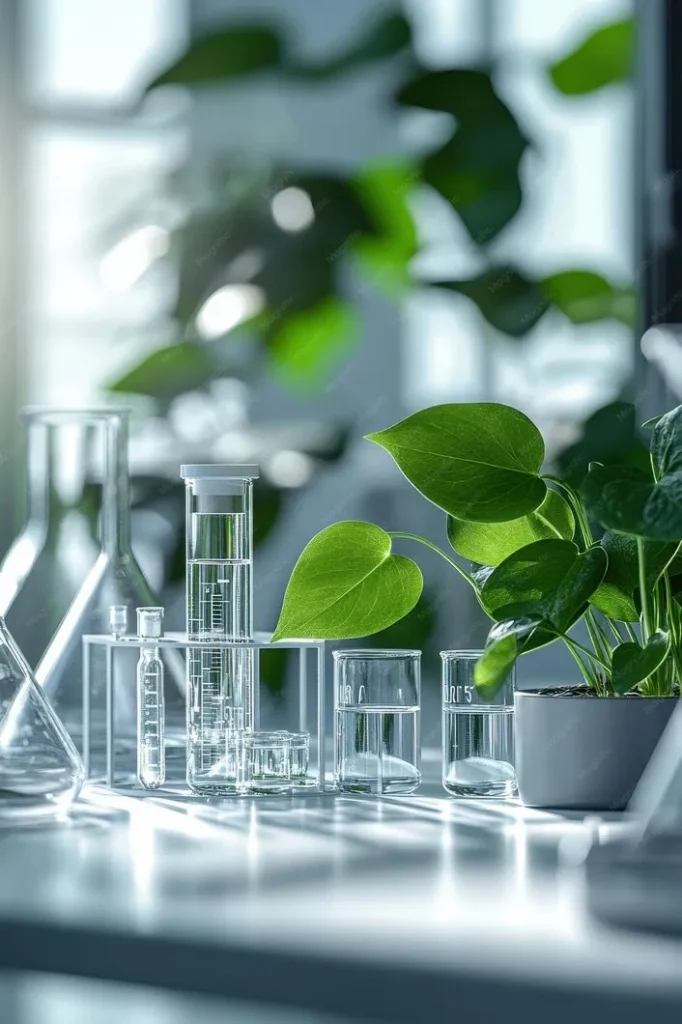
Hands-on biology, chemistry, and environmental testing.
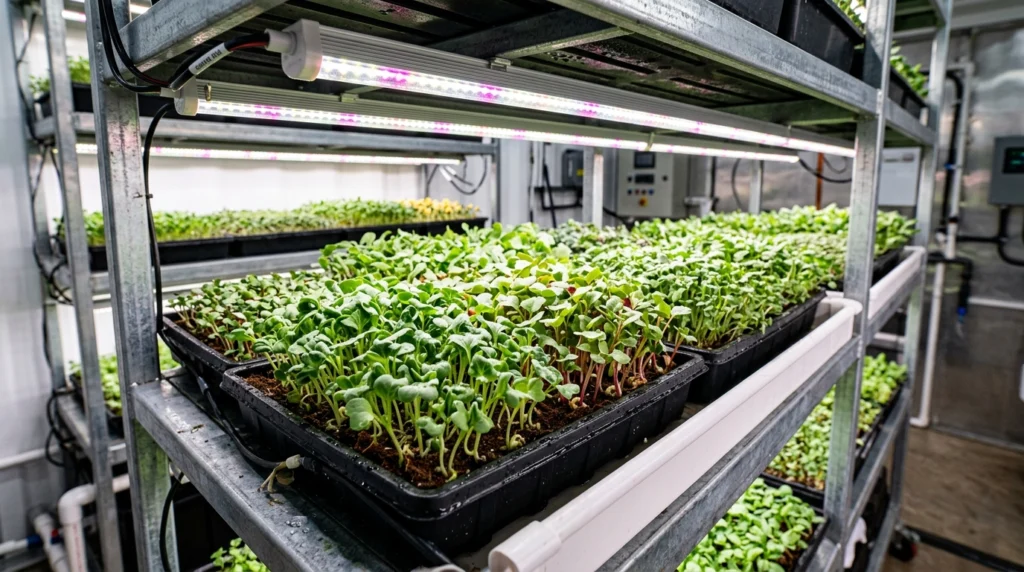
Managing real crops, vertical hydroponics, and crop rotation.
Growing fresh produce for cooking, tasting, and farm-to-table initiatives
Student-run business concepts, managing budgets and product pricing
Community Food Access: Donating harvested produce to support local food banks and community service projects (DONATE)
Food Security Awareness: Connecting classroom concepts with local food access and sustainable urban agriculture.
Civic Engagement: Engaging students in hands-on community service through sustainable farming.
Yes, the system is designed with supervised student use and safety in mind. Safety features include anti-slip flooring, a lockable technical area and chemical storage, emergency-stop buttons, water-leak detection with automatic pump shutdown, ground-fault electrical protection, low-voltage student controls, emergency lighting, exit signage, and smoke detection.
Yes, the PLC automation system features tiered access permissions, giving teachers administrator controls while providing students with view-only access to monitoring data.
A GreenMind Labs Educational Container Farm is a 40-foot, controlled-environment hydroponic learning laboratory built specifically for K–12 education. It combines agriculture, science, engineering, technology, sustainability, automation, and data into one hands-on environment where students can learn by actively interacting with real systems.
Students can explore plant biology, photosynthesis, hydroponics, pH and nutrient management, water conservation, environmental science, engineering, sensors, automation, data analysis, sustainability, food systems, and entrepreneurship. The learning model is simple: Learn. Test. Grow. Measure. This turns classroom concepts into real experiments and measurable outcomes.
Yes, the 40-foot High Cube container features two independent nutrient circuits, 10 vertical hydroponic towers (up to 800 mature-plant positions), and a 5-level tray system (up to 2,000 seedling positions), allowing multiple classes or clubs to run simultaneous experiments.
Project-specific permitting, accessibility, certifications, utilities, and local code requirements are evaluated individually on a project-by-project basis.
The system integrates vertical and multi-level hydroponics, full-spectrum LED lighting, climate control, water filtration and recirculation, UV sterilization, automated EC/pH nutrient dosing, PLC automation, touchscreen controls, and environmental monitoring. Sensors can track temperature, humidity, CO₂, light intensity, EC, pH, water levels, nutrient-solution temperature, HVAC status, and pump status.
Yes. The system is designed with supervised student use and safety in mind, incorporating features such as anti-slip flooring, a lockable technical area and chemical storage, emergency-stop functionality, leak detection, automatic pump-shutdown capability, access permissions, emergency lighting, exit signage, smoke detection, ground-fault electrical protection, and low-voltage student-accessible controls. Project-specific permitting, accessibility, certifications, utilities, and local requirements are evaluated individually.
A: Yes, the system is designed with supervised student use and safety in mind. Safety features include anti-slip flooring, a lockable technical area and chemical storage, emergency-stop buttons, water-leak detection with automatic pump shutdown, ground-fault electrical protection, low-voltage student controls, emergency lighting, exit signage, and smoke detection.
A: Yes, the PLC automation system features tiered access permissions, giving teachers administrator controls while providing students with view-only access to monitoring data.
A: Yes, the 40-foot High Cube container features two independent nutrient circuits, 10 vertical hydroponic towers (up to 800 mature-plant positions), and a 5-level tray system (up to 2,000 seedling positions), allowing multiple classes or clubs to run simultaneous experiments.
A: Project-specific permitting, accessibility, certifications, utilities, and local code requirements are evaluated individually on a project-by-project basis.
Get Started